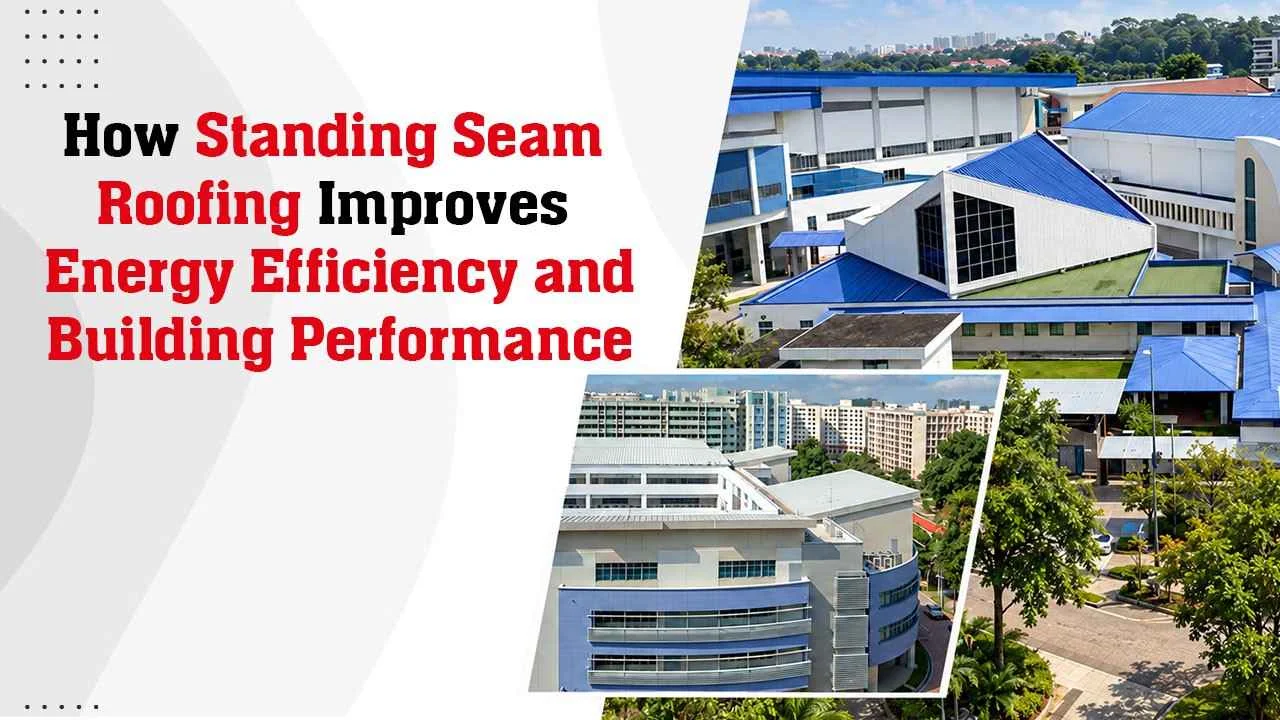
Why does the same building feel noticeably cooler under one type of roof compared to another, even under identical sun and weather? Roof design plays a far bigger role in a building’s energy performance than most people realise, and the profile chosen has a direct effect on heat, ventilation and long-term running costs.
The clean architectural appearance of standing seam roofing makes it a preferred choice by architects and builders but it’s the design of standing seam roofing that has made it the preferred choice for better building performance. This is how the system actually drives energy efficiency.
What Makes Standing Seam Roofing More Energy Efficient Than Traditional Roofs?
Traditional exposed-fastener roofs pierce the roofing surface with hundreds of screws, and each of these penetrations is a potential point where heat, moisture and air can pass through unevenly. Standing Seam Roofing avoids this entirely by using a concealed clip system, keeping the weather surface fully unbroken.
An unbroken, continuous surface allows for far more consistent insulation and ventilation detailing beneath the roof, since there are no fastener interruptions to work around.
How Does Profile Depth Affect a Standing Seam Roof’s Performance?
The height of the raised seam, also known as the profile depth, is a very important parameter for the thermal performance of a standing seam roof. An increased depth profile provides an increased air gap distance between the roof sheet and the surface below, which can assist with improved ventilation and less heat transfer into the building below.
Different projects call for different profile depths depending on the roof’s span, pitch and climate exposure, which is why standing seam systems are typically offered across a range of rib heights rather than a single fixed depth.
What Should You Know About a 167mm Standing Seam Profile?
A 167mm Standing Seam Profile sits at the deeper end of the standing seam range, offering a taller cavity between the roof surface and the structure beneath. Deeper profiles like this are generally considered where a project needs greater insulation depth or where the roof spans longer distances between supports.
As with any profile depth, actual thermal and structural performance depends on the complete roof build-up, including insulation type, ventilation detailing and how the system is installed, not on rib height alone.
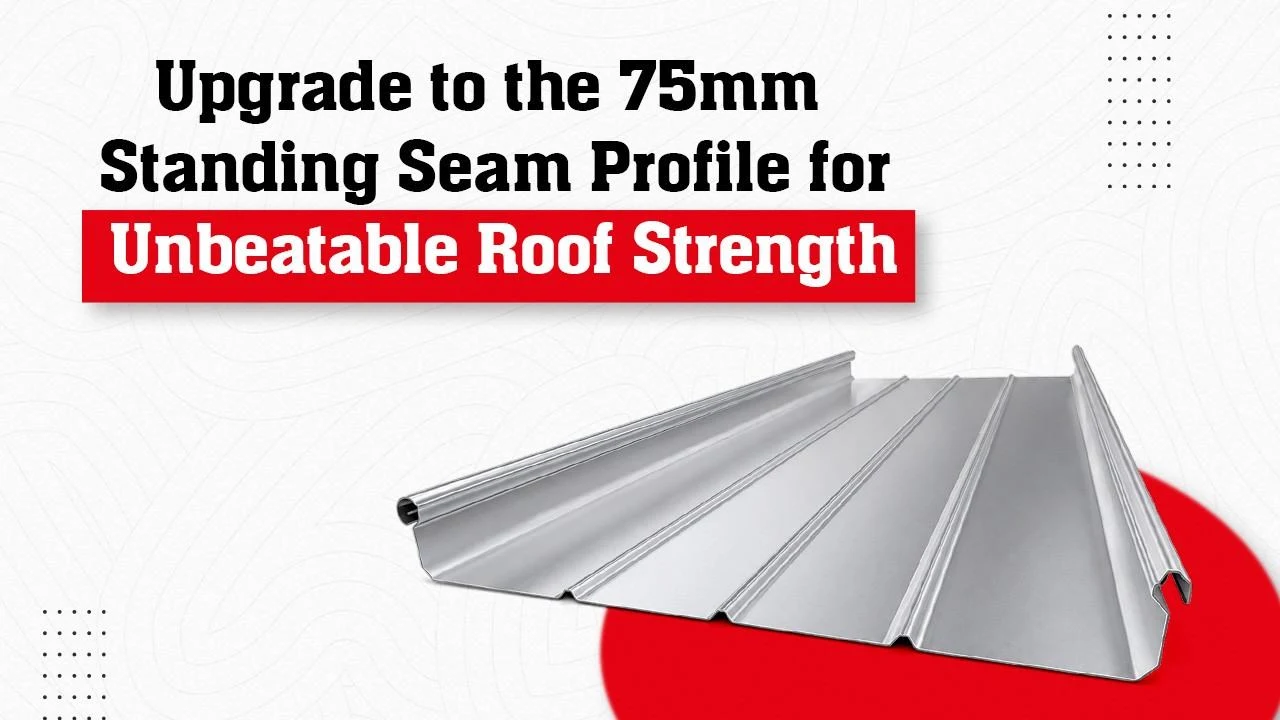
What Should You Know About a 75mm Standing Seam Profile?
An 75mm standing seam profile represents a shallower option within the standing seam family, often suited to projects where a slimmer roofline is preferred without sacrificing the core benefits of concealed fixing and continuous coverage.
Shallower profiles can still deliver strong energy performance when paired with appropriate insulation beneath the roof sheet, since much of a roof’s thermal performance comes from the full build-up rather than the seam height in isolation.
How Does Ventilation Beneath the Roof Improve Building Performance?
Standing seam systems are often installed with a ventilated air space beneath the roof sheet. This space allows hot air that becomes trapped near the roof surface to escape rather than radiating down into occupied spaces below. This ventilation strategy works with the roof’s insulation to reduce cooling loads, which is particularly important in India’s warmer climate areas.
Combined with the roof’s reflective coated finish, this approach can meaningfully reduce the amount of heat that actually reaches the building interior on hot days.
What Common Mistakes Reduce a Standing Seam Roof’s Energy Performance?
A few recurring mistakes undermine the energy benefits a standing seam roof should otherwise deliver:
- Skipping proper insulation beneath the roof sheet, assuming the metal alone provides sufficient thermal performance
- Choosing profile depth based on appearance alone, without considering span and ventilation needs
- Poor detailing at eaves and ridges, which can compromise the ventilation pathway
- Ignoring roof pitch recommendations, which affects both water drainage and airflow beneath the sheet
To summarize, standing seam roofing offers best energy performance because of its seamless surface, hidden fixings and the opportunity to choose the profile depth that is most appropriate for the individual project. It is not just the seam height that determines whether a shallower or deeper profile is the right choice for a building, but also span, climate and total roof build-up.
LCP’s Standing Seam Roofing Systems
At LCP Building Products, our standing seam roofing range is manufactured in steel, aluminium and titanium zinc at our Chennai facility, under our ISO 9001:2015 certified process, with profiles suited to a range of project requirements. If you’re planning a roof designed for genuine energy performance as well as architectural appeal, contact our team at marketing@lcpgroup.asia or call 044 2989 2772 to discuss the right profile for your building.
FAQs
What Is the Main Energy Benefit of Standing Seam Roofing?
Its unbroken, concealed-fixing surface allows for more consistent insulation and ventilation detailing compared to roofs with exposed fasteners.
How Does a Deeper Standing Seam Profile Affect Insulation?
A deeper profile will usually allow for a larger cavity for insulation and ventilation, but overall performance is still dependent on the complete roof build-up.
Why Choose a 75mm Standing Seam Profile Over a Deeper Option?
This is suitable for projects requiring a slimmer roofline but still requiring the benefits of concealed fixing and continuous coverage, providing the insulation is properly detailed.
Best Standing Seam Profile Depth for Hot Climates?
This depends on the project’s span and ventilation strategy; both shallower and deeper profiles can perform well when paired with appropriate insulation and airflow detailing.
Difference Between a 167mm and a 75mm Standing Seam Profile?
The main difference is cavity depth, with the deeper 167mm option generally suited to longer spans or greater insulation requirements, and the 75mm option suited to slimmer roofline designs.
DISCLAIMER: This information is for general informational purposes only. Before finalizing your project design, please check with LCP Building Products for the latest product specifications including exact profile dimensions.
Explore our latest Blogs
Roofing Accessories Checklist: Essential Components for a Leak-Free and Durable Roof
How to Choose the Right C&Z Purlins for Stronger and Longer-Lasting Steel Structures
Metal Decking Explained: Everything Builders Need to Know Before Starting a Project
Why Standing Seam Roofing Is Becoming the First Choice for Modern Industrial Buildings