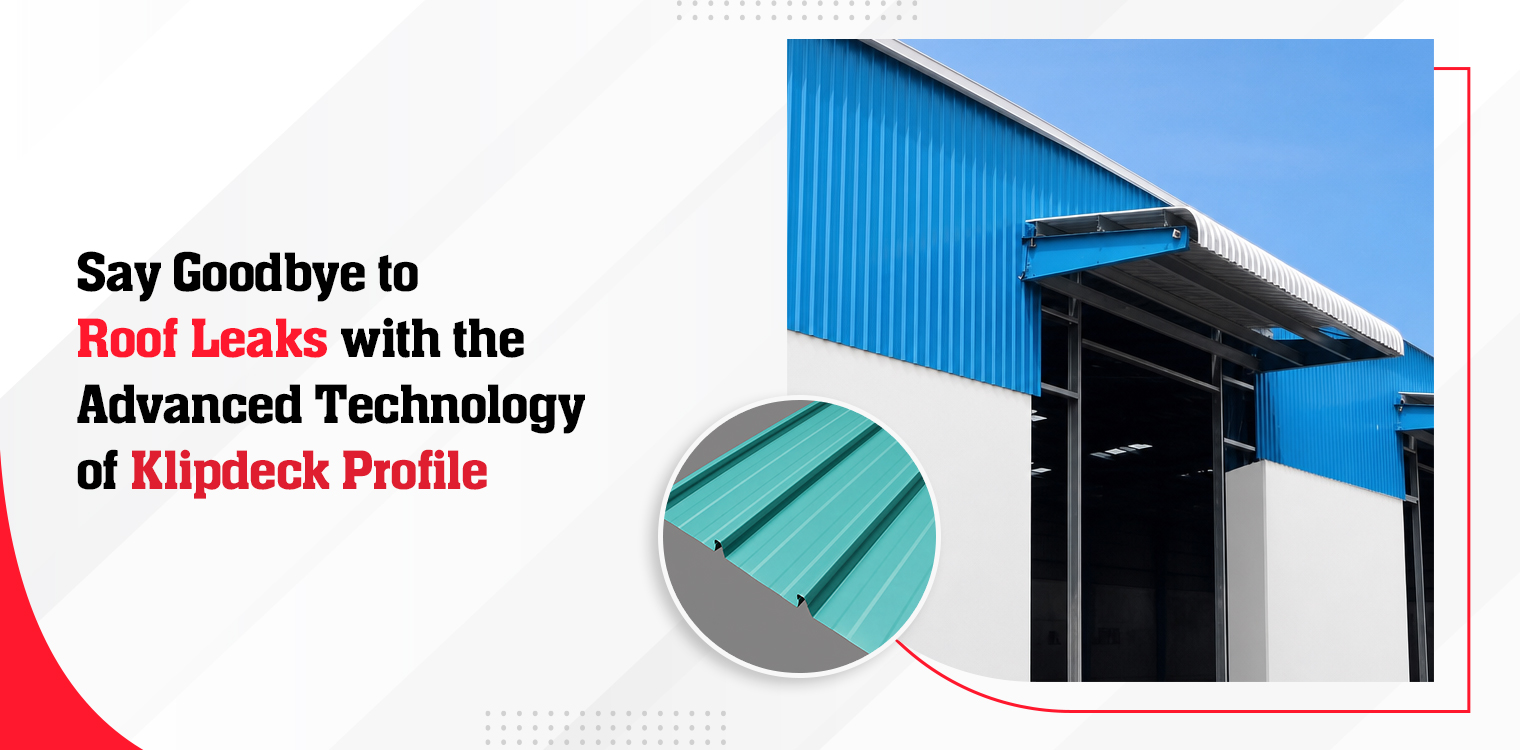
Roof leaks often start at small points that are easy to overlook. Exposed screws, joints and ageing seals can become weak spots over time, especially when a roof is exposed to heavy rain and changing temperatures.
The Klipdeck Profile uses a different approach. Instead of fixing the sheets through the top, concealed clips hold the panels in place from underneath. This keeps the roof surface free from exposed fixing points and gives water fewer places to get in.
For warehouses, factories and other large buildings, this type of concealed fixing can be an important consideration when long-term roof performance matters.
How Does the Klipdeck Profile Work?
The system uses clips that are fixed to the purlins below the roofing sheets. The panels are then fitted over these clips and locked into position through their profiled ribs.
Because the sheets are not fixed through their exposed surface, there are no rows of screw heads running across the weather-facing side of the roof.
The arrangement also allows the panels to accommodate normal thermal movement. Metal expands when temperatures rise and contracts as they fall. A concealed clip system allows this movement without relying on exposed fasteners to hold the sheet in place.
The result is a roof surface with continuous, clean lines and concealed fixings.
Why Is Concealed Clad Roofing Useful for Large Buildings?
Concealed clad roofing can be particularly useful where protecting the building and its contents from water ingress is a major consideration.
In a conventional screw-fixed roof, the exposed screws need to be sealed properly to keep water out. Over time, the washers and seals can wear down, and poor installation can make the problem worse.
With a concealed system, the primary fixing points sit beneath the roofing panel. This removes exposed screw penetrations from the main weather surface.
It does not mean that every roof detail is automatically leak-proof. Ridge details, roof openings, flashings, joints and installation quality still matter. However, reducing penetrations in the main roof surface can simplify one important part of water management.
What Makes a Watertight Roof Profile?
A watertight roof profile is not defined by its shape alone. The complete roofing system needs to work together.
The profile, clips, joints, flashings, roof slope and installation method all have a role to play. Good detailing is especially important around areas such as rooflights, vents, penetrations and changes in direction.
The Klipdeck Profile uses concealed fixing as part of this approach. The raised ribs and interlocking arrangement help create a continuous roof surface, while the concealed clips keep the main fixing points underneath the panels.
For buildings exposed to heavy rainfall, this combination can provide an additional level of protection against water entering through exposed fastener points.
Where Can Klipdeck Be Used?
Klipdeck is suitable for consideration in a range of industrial and commercial buildings where long roof runs and concealed fixing are required.
Typical applications can include warehouses, factories, commercial buildings and large-span structures. It can also be considered where the appearance of exposed fasteners is not desirable.
The system can be particularly useful for buildings where roof maintenance or water ingress could affect stored materials, equipment or day-to-day operations.
The suitability of the profile will depend on the building structure, span, roof design and other project requirements.
How Does Klipdeck Compare With Screw-Fixed Roofing?
Factor | KLIPDECK® System | Screw-Fixed Roofing |
Fasteners | Concealed clips beneath the sheet | Fasteners pass through the sheet |
Roof penetrations | No exposed fastener penetrations on the sheet surface | Fasteners penetrate the roofing sheet |
Thermal movement | Panels can accommodate movement through the clip system | Movement needs to be accommodated around fixed points |
Long-term leak risk | Main roof surface remains free from exposed fastener points | Fastener points need proper sealing and detailing |
Maintenance | Inspection of clips, joints and roof details | Inspection of fasteners, washers, joints and roof details |
Appearance | Clean, uninterrupted roof lines | Visible fastener pattern |
What Are Metal Decking Sheets Used For?
Metal decking sheets are often used in a building’s roof or structural system, depending on how they’re designed. Their profiled shape gives them the strength to work with the supporting structure and form part of the overall roof or floor assembly.
Their profile, thickness, span capability and fixing method need to be selected according to the project’s structural requirements.
This is different from a concealed roofing system such as Klipdeck, where the focus is on the roof’s weather-facing surface and concealed method of fixing the panels.
Why Choose Structural Roofing Products From an Experienced Manufacturer?
A roofing system involves more than the main panels. The clips, flashings, trims, fasteners and other components all need to work together.
This is where an experienced manufacturer can make the specification process easier. Project teams can discuss the roof structure, spans, profile selection and detailing before installation begins.
LCP Building Products manufactures roofing and cladding profiles at its Chennai facility and offers a range of structural roofing products for industrial and commercial applications.
For projects considering Klipdeck, the LCP team can review the drawings and project requirements to determine the appropriate profile and fixing arrangement.
A Better Approach to Concealed Roof Fixing
A roof does not have to rely on rows of exposed screws across its weather surface. The Klipdeck Profile uses concealed clips to hold the panels in place while allowing for normal thermal movement.
For industrial and commercial buildings where water management, clean roof lines and long-term performance are important, concealed fixing is worth considering at the design stage.
LCP Building Products can help project teams assess whether the system is suitable for their building and provide guidance on profile selection and related components.
FAQs
How does the Klipdeck Profile prevent exposed screw penetrations?
The roofing panels are secured using clips fixed beneath the sheets. The panels lock over these clips, so the main weather-facing surface does not require exposed screws.
Can Klipdeck be used for long roof runs?
The system is suitable for long roof runs because the concealed clips allow the panels to accommodate normal thermal movement. The actual panel length and clip arrangement should be determined for the specific project.
Can rooflights and vents be used with Klipdeck?
Yes, roof openings can be incorporated when they are properly designed and detailed. Flashings and other components need to be suitable for the Klipdeck system.
Can Klipdeck be installed over an existing structure?
This depends on the existing purlins, structural condition and other site requirements. Drawings and structural details should be reviewed before installation.
Is the Klipdeck Profile tested for water penetration?
The relevant profile and system testing should be confirmed against the manufacturer’s current technical documentation. LCP can provide the applicable test information for the specified system.
Leave A Comment