
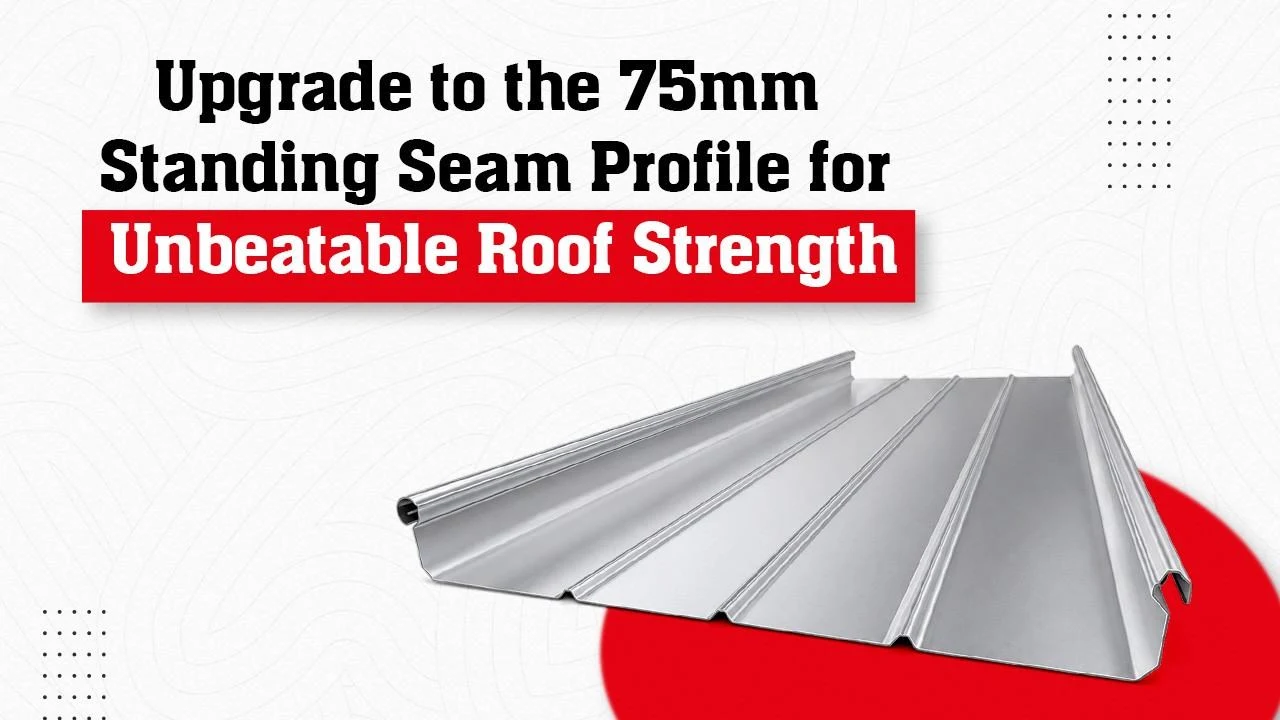
Why do some standing seam roofs stay watertight for decades while others start leaking within a few years of installation? The difference often comes down to the profile’s rib height, seam design and how well it’s engineered to move with the building rather than against it.
An 75mm standing seam profile sits among the deeper rib options in modern architectural roofing, and understanding what a taller seam actually offers helps explain why so many architects specify this style of roof for buildings meant to last.
What Makes a Deeper Standing Seam Profile Structurally Stronger?
The height of a standing seam’s rib plays a direct role in how the roof performs. Taller ribs create a deeper channel for water to travel through, which keeps rainwater well below the level of any fastening points.
This is exactly the principle behind systems like LCP LYCORZIP®, which uses a crest height of 75mm to achieve strong waterproofing performance, with its high ribs cited as a key reason the system handles water so effectively even at low roof pitches.
How Does Standing Seam Roof Cladding Achieve a Leak-Free Finish?
Good standing seam roof cladding relies on more than just rib height alone. The double-lock seam used in systems like LYCORZIP® joins panels together without any exposed fixings, since clips are formed directly into the seam itself and fastened to the purlins beneath.
This concealed fixing approach means there are no screw holes piercing the weather surface of the roof, removing the most common cause of leaks in older, exposed-fastener roofing systems.
What Role Does LCP LYCORZIP Play in Modern Standing Seam Design?
LCP LYCORZIP® is formed as a jointless material with an effective cover width of 480mm, mechanically seamed on-site using a heavy-duty electric portable roll-forming machine. This on-site seaming process allows the roof to be formed as one continuous run, built to withstand wind uplift and foot traffic during installation and maintenance.
A minimum roof pitch of around 2 degrees is generally recommended for this kind of system, though actual suitability depends on support spacing and how precisely the purlins and roof plane are aligned during construction.
Why Do Architects Specify Architectural Roofing Solutions Like This?
Architectural roofing solutions built around standing seam profiles offer something beyond function alone. The unbroken, mechanically seamed lines create a clean architectural appearance that suits contemporary building designs, while systems like SPANLOCK® add a slim rib profile that keeps this aesthetic without compromising wind uplift resistance.
For architects, this combination of appearance and performance is often exactly what a project brief demands.
What Should You Know Before Choosing Premium Metal Cladding?
A few practical points are worth checking before specifying premium metal cladding for a project:
- Confirm the panel’s effective cover width and how many panels the roof area will need
- Check the recommended minimum roof pitch against your building’s actual design
- Ask whether fixings are concealed within the seam or exposed on the roof surface
- Confirm the roll-forming process used, since on-site seaming avoids joints in long runs
Is Titanium Zinc Roofing a Suitable Alternative for Standing Seam Systems?
For projects wanting a different material character, titanium zinc roofing offers an alternative to steel or aluminium standing seam systems, often chosen for its distinctive weathered appearance over time. LCP manufactures roofing profiles in steel, aluminium and titanium zinc, giving architects material flexibility while keeping the same standing seam design principles across each option.
Choosing the Right Standing Seam Profile
Rib height, seam design and installation method all work together to decide how well a standing seam roof performs. Deeper profiles and concealed, double-lock seams generally offer stronger waterproofing and a cleaner architectural finish, though the right choice always depends on your specific roof pitch, span and design intent.
LCP’s Standing Seam Roofing Range
At LCP Building Products, our standing seam systems, including LCP LYCORZIP® and LCP SPANLOCK®, are manufactured in steel, aluminium and titanium zinc at our Chennai facility, under our ISO 9001:2015 certified process. If you’re considering an upgrade to a stronger, more watertight standing seam roof for your next project, contact our team at marketing@lcpgroup.asia or call 044 2989 2772 to discuss the right profile for your building.
FAQs
What Is the Advantage of a Deeper Standing Seam Profile?
A taller rib creates a deeper water channel, keeping rainwater further from fastening points and generally improving waterproofing performance.
How Does Standing Seam Roof Cladding Prevent Leaks?
Concealed clip systems keep fixings hidden within the seam rather than piercing the roof’s weather surface, removing a common source of leaks.
Why Choose LCP LYCORZIP for a Standing Seam Roofing Project?
It offers a jointless, mechanically seamed finish with a wide effective cover width, built to handle wind uplift and foot traffic reliably.
Best Minimum Roof Pitch for a Standing Seam System Like LYCORZIP?
A minimum pitch of around 2 degrees is generally recommended, though this depends on support spacing and alignment accuracy.
Difference Between Standing Seam Roof Cladding and Titanium Zinc Roofing?
Standing seam refers to the seam design and fixing method, while titanium zinc refers to the material itself; the two can be combined, since standing seam systems are available in titanium zinc as well as steel and aluminium.
Explore our latest Blogs
Say Goodbye to Roof Leaks with the Advanced Technology of Klipdeck Profile
Why Trapezoidal Roofing Is a Practical Choice for Industrial Buildings
Top 10 Benefits of Aluminium Standing Seam Roofing Systems
Why Tile Profile Roofing Is a Popular Choice for Residential and Commercial Projects
Leave A Comment