A roof on an industrial building has a very different job from the roof of a house. It may cover thousands of square metres, deal with heavy monsoon rain, sit in direct summer heat and still need to allow maintenance teams to access the roof when required.
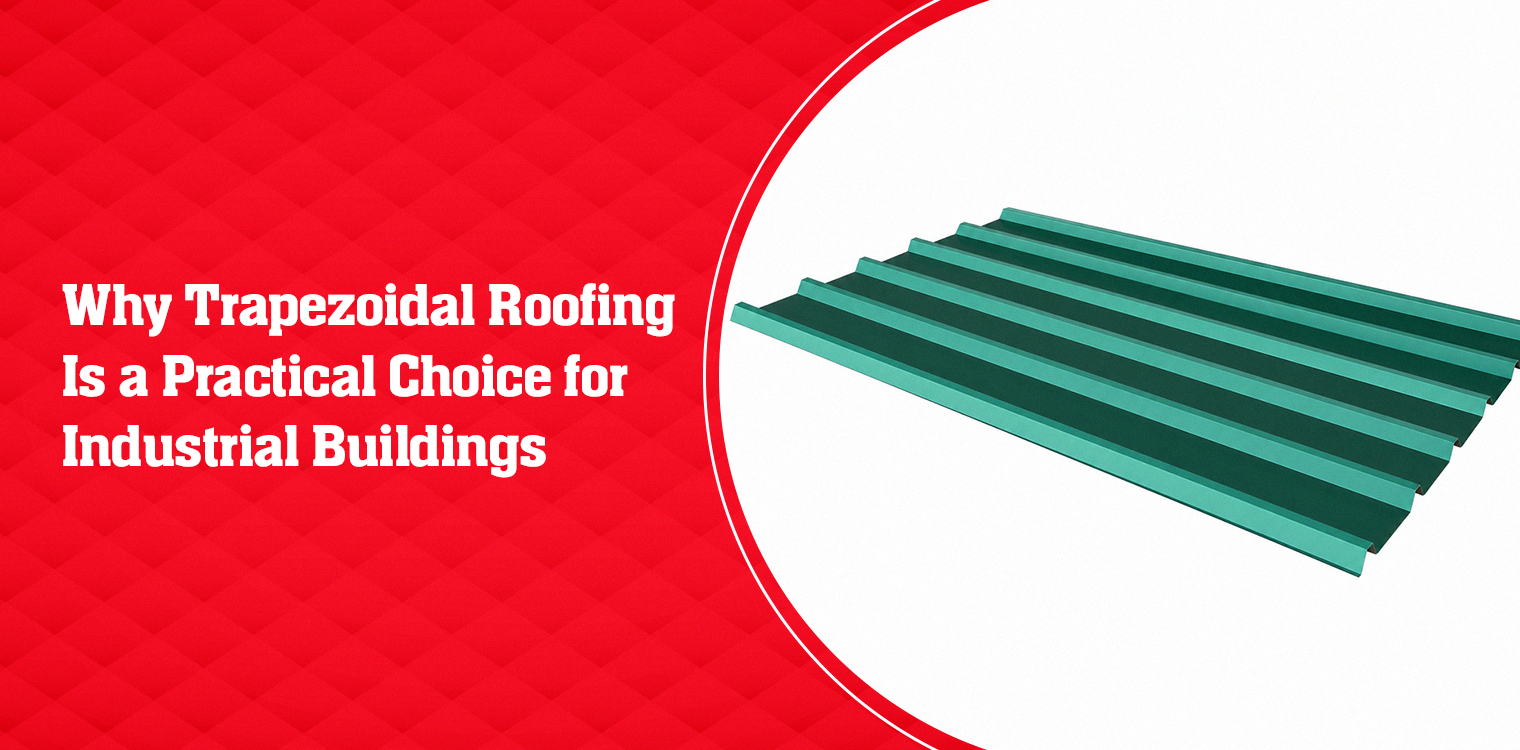
This is one reason Trapezoidal Roofing is widely used for factories, warehouses, workshops and commercial buildings. The profile uses raised ribs to give the sheet greater stiffness than a flat sheet, while the valleys between the ribs help direct rainwater towards the drainage points.
The profile is simple, but its performance comes down to how the sheet is designed, specified and installed.
What Is a Trapezoidal Roof Profile?
A trapezoidal roof profile has a series of raised ribs with flat tops and angled sides. These folds change the way the sheet behaves under load.
A flat sheet can bend under pressure, but the raised ribs make it much stiffer. This allows the sheet to span greater distances between supports when the right thickness and profile are used.
The shape also helps with drainage. Rainwater flows through the valleys of the sheet towards the lower edge of the roof. For buildings in areas that receive heavy rainfall, proper roof slope, drainage design and installation are just as important as the profile itself.
This makes the trapezoidal roof profile useful for large roofs where strength, coverage and water management all need to be considered together.
Why Is Trapezoidal Roofing Suitable for Indian Weather?
India’s climate varies considerably from one region to another, but industrial roofs commonly face intense sunlight, seasonal rainfall and, in some areas, strong winds.
Trapezoidal Roofing can be specified for these conditions by selecting the appropriate sheet thickness, profile depth, coating and fixing system.
The coating deserves particular attention. Since the roof is continuously exposed to the outside environment, the steel and its protective coating need to be suitable for the location and expected exposure.
The roof slope also matters. A good profile cannot compensate for inadequate drainage or incorrect installation. Water needs a clear path off the roof, and laps, fasteners and flashings need to be detailed properly.
In other words, the performance of the roof comes from the complete system, not just the shape of the sheet.
Why Are Metal Roofing Sheets Popular for Large Industrial Roofs?
Large industrial roofs need materials that can be transported, handled and installed efficiently.
Metal roofing sheets offer a useful combination of strength and relatively low weight. They can also be produced in long lengths where manufacturing, transportation and site conditions allow it.
Longer sheets can reduce the number of end laps across the roof. This can simplify installation and reduce the number of joints that need to be detailed.
Another advantage is consistency. Factory roll-forming allows sheets to be produced to a specified profile and length, helping installers work with uniform panels across a large roof.
For a warehouse or factory, these practical considerations can be just as important as the finished appearance.
Can a Trapezoidal Roof Profile Also Be Used for Wall Cladding?
In many industrial projects, the roof and walls are designed as one building envelope rather than as completely separate elements.
Compatible trapezoidal profiles can be used for wall cladding, depending on the product specification. This allows the same design language to continue from the roof down the facade.
LCP K CLAD is a cladding profile from LCP Building Products that can be considered for industrial and commercial applications. Using compatible roofing and cladding products can also make it easier to coordinate colours, trims and flashings.
For architects and contractors, this can simplify both the visual design and product selection.
What Should You Consider Before Choosing Trapezoidal Roofing?
The profile is only one part of the specification. Before selecting Trapezoidal Roofing, consider these key factors.
Sheet thickness and material: The right specification depends on the required span, structural design and environmental exposure.
Profile depth: Deeper ribs can provide greater stiffness, but the appropriate profile should be selected using the manufacturer’s technical information and load data.
Coating: The coating should be suitable for the project’s environment. This becomes particularly important in areas with high humidity, industrial exposure or other aggressive conditions.
Roof slope: The slope needs to be suitable for the selected profile so that rainwater can drain effectively.
Fixing and detailing: Fasteners, laps, flashings and penetrations all need to be properly detailed. Small installation errors can affect the performance of an otherwise well-specified roof.
Manufacturing quality: Consistent dimensions and accurate roll-forming help sheets fit together correctly during installation.
These factors are worth discussing with the manufacturer before ordering the sheets rather than treating them as installation-stage decisions.
How Can an Industrial Cladding Manufacturer Help?
Choosing a roofing sheet is easier when the manufacturer understands how it will be used.
An experienced industrial cladding manufacturer can provide information on available profiles, sheet specifications, load performance and compatible accessories. This helps the project team make decisions based on the actual requirements of the building.
It also helps when the same supplier can provide roofing and cladding components. Profiles, colours, flashings and trims can then be coordinated from the beginning.
For a large industrial project, this kind of coordination can save time during procurement and installation.
How Do Commercial Roofing Solutions Support Modern Projects?
Today’s commercial and industrial buildings often need roofing to work alongside insulation, ventilation, solar installations, drainage and other building systems.
This means commercial roofing solutions need to be considered as part of the wider building design.
LCP Building Products manufactures roofing and cladding profiles for industrial and commercial applications at its Chennai facility. Its product range includes options for roofing and cladding where coordinated profiles and finishes are required.
Early discussions with the roofing manufacturer can help the project team assess the available options before the roof design is finalised.
Choosing Trapezoidal Roofing for Your Project
There is no single roofing profile that suits every building. The right choice depends on the structure, span, location, weather exposure, roof slope and design requirements.
What makes Trapezoidal Roofing useful for industrial construction is the combination of a stiffened profile, efficient coverage and practical installation.
When the sheet specification, supporting structure and installation details are considered together, the result can be a roofing system suited to the demands of large industrial and commercial buildings.
LCP Building Products can help project teams evaluate roofing and cladding requirements and select suitable profiles for their application.
FAQs
What is a trapezoidal roof profile?
A trapezoidal roof profile is a metal sheet formed with raised ribs and angled sides. The ribs increase the sheet’s stiffness, while the valleys help direct rainwater along the roof.
Are metal roofing sheets suitable for industrial buildings?
Yes. Metal roofing sheets are widely used for industrial applications because they can provide strength with relatively low weight and can be manufactured in different profiles and lengths.
Is Trapezoidal Roofing suitable for heavy rainfall?
It can be, provided the roof profile, slope, drainage system, laps and installation details are correctly designed for the conditions.
Can trapezoidal roofing be used for walls?
Compatible trapezoidal profiles can be used for wall cladding in suitable applications. Using related profiles for the roof and walls can also create a more consistent appearance.
What thickness of sheet should I choose?
The required thickness depends on factors such as span, support spacing, design loads, material specification and environmental conditions. The manufacturer’s load data should be checked before making a selection.
Can solar panels be installed on a trapezoidal roof?
Solar panels can be installed on suitable metal roofing systems, but the mounting method, fixing points and structural capacity need to be assessed for the specific roof.
Leave A Comment