Many people believe that you have to choose between two types of roofs. The choice is between a lovely clay tile roof which makes a house look warm and traditional, and a practical metal sheet roof which lasts a long time and fits the budget. Beauty, or strength. Take your pick.
That belief of tile profile is outdated. There is a roofing option that gives you both at once, and it has quietly become one of the most requested choices for homes, villas, resorts, schools and showrooms across India. It looks like a classic tiled roof from the street, yet it is actually a single sheet of coated steel underneath.
What Is a Tile Profile Roofing Sheet?
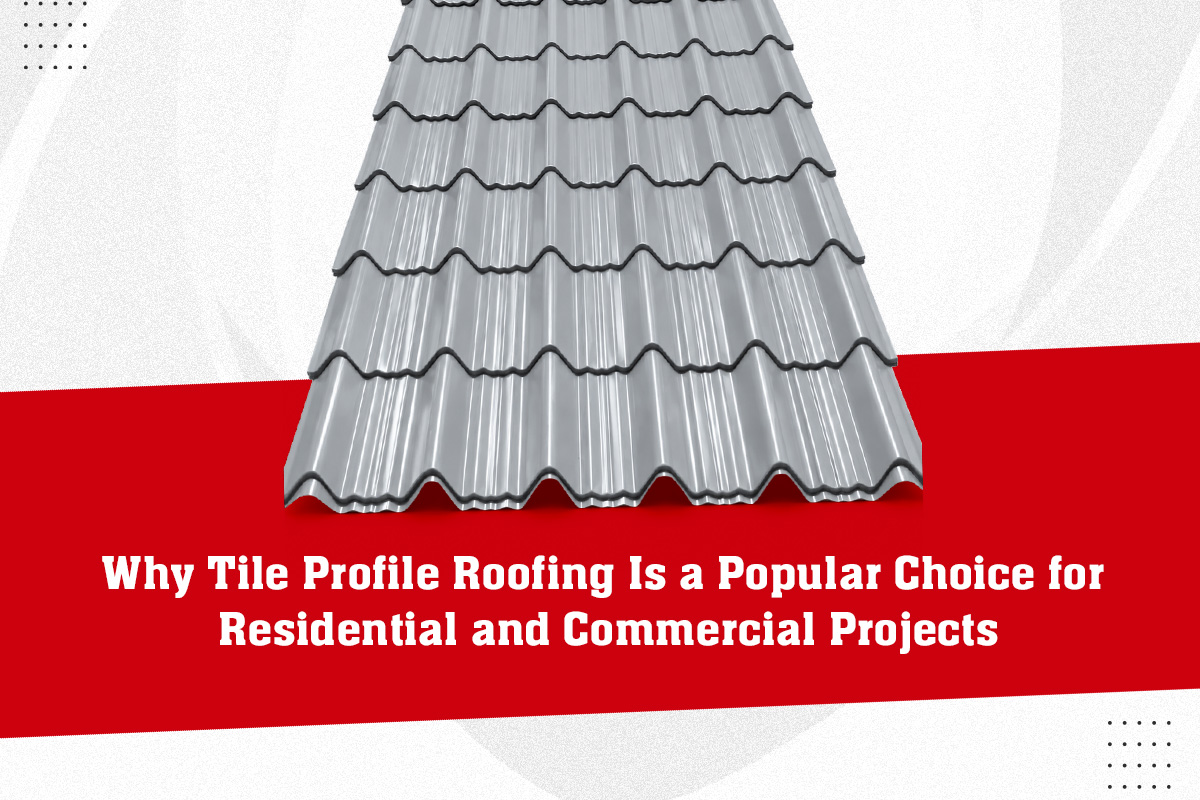
A Tile Profile sheet is a metal roofing sheet pressed into the stepped shape of traditional roof tiles. From a distance, the roof looks like it is covered with hundreds of individual tiles. Walk closer and you find long, light steel sheets, each one covering in a single piece what would need dozens of clay tiles.
The base material is colour coated steel, the same family of material used on industrial roofs, shaped and finished to suit buildings where looks matter as much as protection. So a roofing tile sheet gives your building the charm of tiles with the performance of steel.
Why Do Clay Tiles Cause Problems That Metal Tiles Solve?
Clay and concrete tiles have real drawbacks that homeowners discover slowly. They are heavy, so the roof structure underneath must be built stronger and costs more. They crack when a branch falls or someone walks carelessly during maintenance. They shift in heavy wind and let water sneak in through gaps. And replacing broken pieces high up on a roof is a recurring headache.
Metal roof tiles answer each of these problems directly. One sheet weighs far less than the tiles it replaces, so the supporting structure stays lighter and cheaper. Sheets screw down firmly and do not shift in storms. There are no individual tiles that can crack or slip. And because each sheet covers a large area with far fewer joints, rainwater has far fewer places to find a way in.
Tile Profile vs Traditional Clay Tiles
Factor | Tile Profile Sheet | Traditional Clay Tiles |
Weight | Light, easy on the structure | Heavy, needs stronger support |
Installation | Large sheets, fixed quickly | Piece by piece, slow work |
Breakage | No individual pieces to crack | Tiles crack and slip over time |
Leakage risk | Few joints, screwed down firmly | Many gaps between tiles |
Wind resistance | Stays fixed in storms | Tiles can lift and shift |
Maintenance | Occasional washing | Regular checks and replacements |
Look | Classic tiled appearance | Classic tiled appearance |
The last row is the point. You give up nothing in looks.
How Does the Colour Coating Protect the Roof?
A colour coated roofing sheet is built in layers, like a good raincoat. The steel core carries the strength. A zinc-aluminium layer over it fights rust. The colour coat on top gives the finish you see, and it does more than look good. It shields the metal from sun and rain, resists fading year after year, and keeps the roof looking freshly laid long after installation.
Which Buildings Suit a Tile Roofing Profile Best?
Anywhere the roof is part of the building’s face. Homes and villas, naturally. But also farmhouses, resorts and homestays where guests photograph the property. Schools and temples where a traditional look matters. Showrooms, cafes and commercial buildings that want warmth instead of an industrial look.
For all of these, a tile roofing profile delivers the appearance the architect drew, at a weight and speed the contractor appreciates, and a life span the owner will value for decades.
This balance of looks and performance is exactly what the LCP LYCORPANEL range brings.As part of our roofing lineup at LCP Building Products, every roof profile sheet is roll-formed in-house on precision machinery from quality coated steel, supported by ISO 9001:2015, ISO 14001:2015 and ISO 45001:2018 certifications supplied for over 30 years. From a single villa to a full resort, our team helps you pick the right profile, colour and accessories for the building in front of you.
FAQs
Does a tile profile roof make noise in the rain?
With proper installation over insulation or underlayment, rain noise reduces to normal levels.
Can it be installed over an old roof structure?
Often yes, since the sheets are light, but have the existing structure checked first.
How long does the colour last?
Quality coated sheets hold their colour for many years, with only gradual, even weathering.
Is it suitable for coastal areas?
Yes, with the right coating specification for salty air; mention your location when ordering.
What colours are available?
Multiple standard shades are available; our team can share the current colour options.
Leave A Comment